Data Science and Applied Mathematics

Mathematics, statistical learning, and the data that real operations produce.

Data Scientist Advisor in drilling at Continental Resources, Oklahoma City.

About

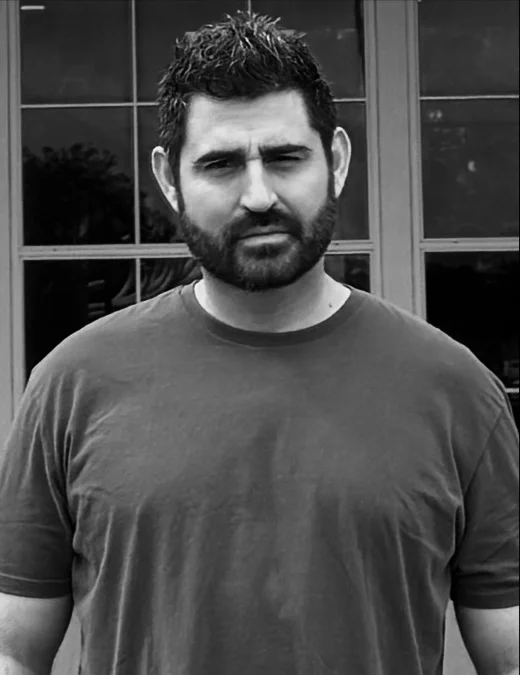
Portrait of Heberto G. Salinas.

I trained in mathematics, spent fifteen years in upstream drilling operations, and returned to school for an M.S. in Data Science. I now build real-time analytical systems on rig sensor data: streaming pipelines, predictive models for performance and equipment failure, and the engineering computations that sit beside them.

Outside that work I write small, narrowly scoped studies. Each one asks a single question, holds everything else fixed, and states what the evidence does and does not support.

Interests

Research

  1. Manuscript · 2026 · revised from a 2010 undergraduate paper

    Optimal Solution to a Transformation Problem of a Triangular Array

    Reduces the coin-triangle inversion problem to finding the nearest integer point on the plane k₁ + k₂ + k₃ = n, recovering the minimum ⌊n(n+1)/6⌋ and every optimal configuration. Extends the argument to d-dimensional piles: optimal placements are balanced, tetrahedral piles have a closed form, and the disjoint-corner pattern fails from dimension four.

  2. Technical Report 002 ·

    Choosing PCA Components in High Dimensions

    The Calibration–Power Trade-off Between Parallel Analysis and Spectral Thresholding

    A simulation study of false retention and detection power for parallel analysis and Marchenko–Pastur thresholding, using 686,500 synthetic datasets with known latent structure.

  3. Technical Report 001 ·

    Same Data, Different Representation

    An Empirical Study of Target Transformation in Rate-of-Penetration Prediction

    A controlled comparison of raw and log1p targets across three geothermal wells and five model families, evaluated on unseen depth intervals.

Learning

Ongoing · learning project

A small language model, built by hand

A decoder-only transformer written from scratch in PyTorch and trained on a laptop, using short stories and exactly verified integer arithmetic. The goal is understanding each part, from tokenizer to decoding, not a research claim. The first 27M-parameter model writes coherent short stories but solves about one arithmetic problem in twenty: it learned the answer format, not place value.

Background

2025–
Data Scientist Advisor, Drilling · Continental Resources
2025
M.S. Data Science · Texas Tech University
2011–2025
Drilling and drilling-fluids engineering · Lewis Energy Group, Halliburton
2011
B.S. Mathematics, minor in Economics · Texas A&M International University

Complexity should be earned by the problem, not assumed by default.